Healthcare
From screening readings to professional review
Why confirmed readings, patient context, and clear review responsibilities matter when designing a digital screening workflow.
ChitraYantra Technologies · · 4 min read
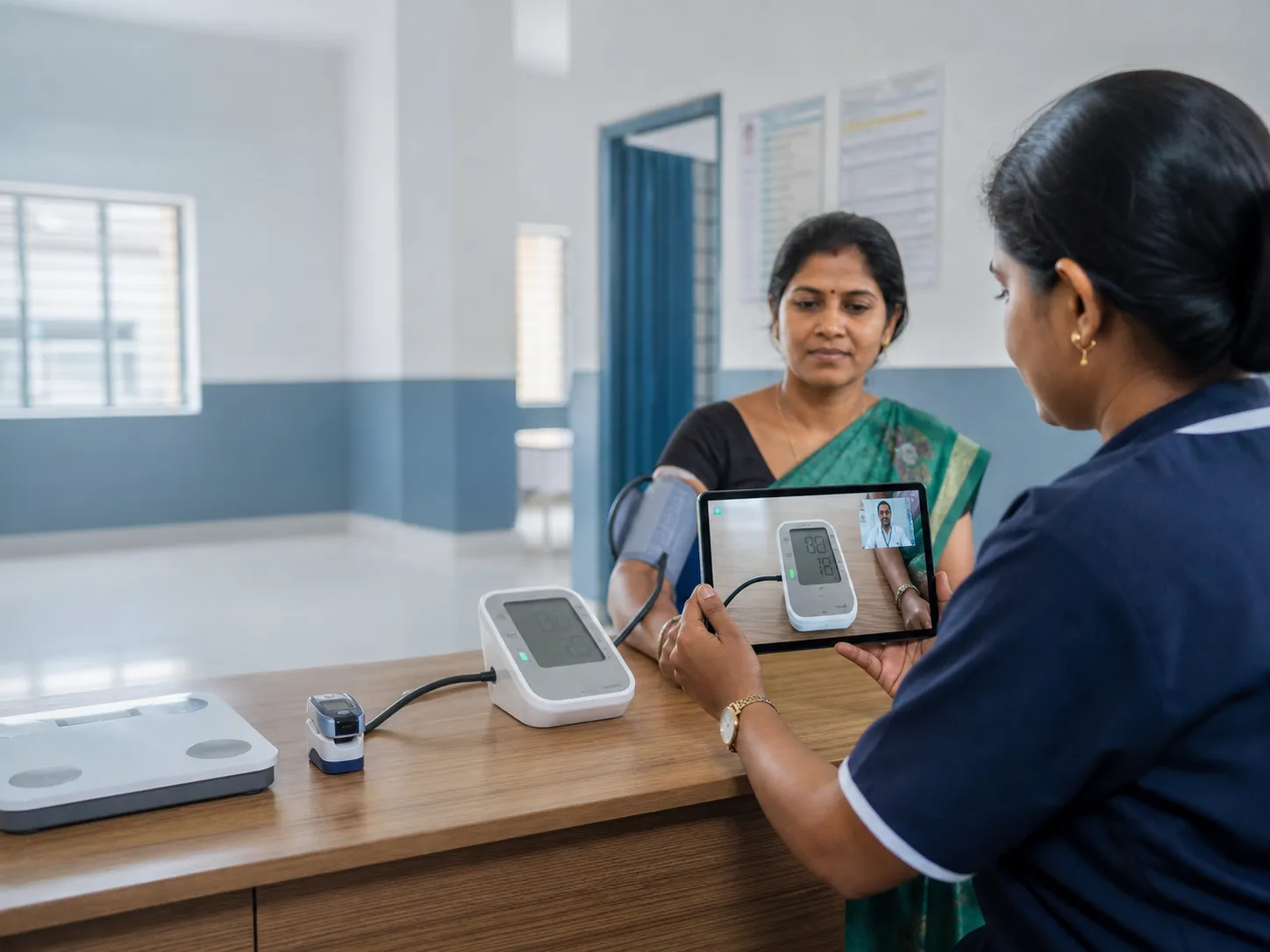
Capture is the beginning of the workflow
A digital screening workflow involves more than capturing a number from a device or a document. The record needs to identify the patient, the source of the reading, the time of capture, and the person responsible for confirming it. Ambiguous or incomplete inputs need a defined correction process before they are used downstream.
e-Swasthya's attendant-led Android workflow supports guided capture, confirmation of readings, triage review, patient history, and extraction from supporting reports. The programme's clinical protocols and professional responsibilities must be agreed separately.
Keep extracted information reviewable
When software extracts information from a lab report or a prescription, the original document remains important. A reviewer needs to check the source, units, patient identity, and whether the extracted field has been associated with the right record. An extraction result should not be treated as verified solely because it appears in a structured form.
Document quality, naming conventions, and access permissions affect everyday use. A pilot should include representative documents and a way to record corrections without losing the review context.
Define escalation and professional oversight
Screening and triage software supports a workflow; it does not replace a qualified clinician's assessment. The organisation running a programme should define who reviews flagged records, how referrals or follow-up are handled, and what happens when the supported workflow cannot be completed.
Teams evaluating a screening system should confirm the currently available product scope. Doctor and patient applications, teleconsultation, or external health-system integration should be discussed as separate programme requirements where applicable, rather than assumed to be included.
Plan connectivity, access, and handover
Confirm the devices, connectivity, permitted users, and support arrangements needed for the selected deployment. Document who can view patient history, who can amend a record, and how the organisation handles requests concerning personal information. Use authorised representative data for the pilot.
For an e-Swasthya discussion, describe the screening setting, the team operating it, the devices and documents involved, and the professional review process. Do not send patient records or other sensitive health information through the public contact form.